Short answer: three changes do almost all of the work — wash cooler, run full loads, and skip the dryer. Heating water and tumble drying are where the overwhelming majority of a wash's energy goes, so the choice of detergent, which is what most people focus on, is a much smaller lever than the temperature dial. The single biggest factor of all is how long your clothes last, because making a garment costs far more than washing it ever will.
Where the impact actually sits
| Lever | Size of effect | Effort |
|---|---|---|
| Not tumble drying | Very large. A dryer typically uses several times the energy of the wash itself | Low, if you have space |
| Washing at 30 °C instead of 60 °C | Large. Heating the water is most of a wash's energy | None |
| Running full loads | Large. Halves the number of cycles | None, with enough baskets |
| Washing less often | Large, and it extends garment life at the same time | Low |
| Making clothes last longer | The largest of all, by a wide margin | Medium |
| Correct dosing | Moderate. Less chemical to the drain and fewer rinse cycles | None |
| Catching microfibres | Moderate, and specific rather than general | Low to medium |
| Switching detergent brand | Small by comparison | Low |
Temperature, and whether cold really cleans
It does, for everyday soil, because modern enzyme detergents are formulated to work cold and most of what is on clothes is not grease. Cold washing also fades colours less and shrinks cotton less, so it extends garment life at the same time. The exceptions are real but narrow, and it is worth being precise about them rather than washing everything hot to be safe.
- Keep 60 °C for towels and bedding periodically, cloth nappies, anything after illness, and kitchen cloths.
- Use 40 °C for white cotton shirts, because sebum needs a little warmth to lift and cold washing is what greys collars.
- Everything else goes at 20 to 30 °C, which is most of your laundry by volume.
- Run an empty 90 °C drum clean monthly if you otherwise wash cool, or the machine develops its own smell.
The full argument is in does cold water actually clean clothes.
Microplastics, honestly
Every wash of a synthetic garment sheds fibres, and most of them are too small for a treatment plant to catch. The size of the problem is genuine; the size of what any one household can do about it is more modest than most marketing suggests, so it is worth knowing what each option actually does.
| Approach | What it does |
|---|---|
| Washing bag for synthetics | Catches a meaningful share of fibres and reduces shedding by lowering friction. Cheap and simple |
| In-drum catcher ball | Collects some fibres. Less effective than a bag but needs no sorting |
| External filter on the outlet | The most effective household option. Needs plumbing and regular cleaning |
| Full loads, cold, low spin | Less friction means less shedding. Free, and it helps regardless of any device |
| Washing synthetics less often | Directly proportional. Air activewear rather than washing after one light wear |
| Buying fewer synthetic garments | The only approach that addresses the source rather than the symptom |
New garments shed most in their first few washes, so a cheap fleece washed weekly is a far bigger contributor than an old one washed monthly.
Drying
- Spin at the highest speed the fabric allows before drying. Every extra minute of spin is drying you do not pay for.
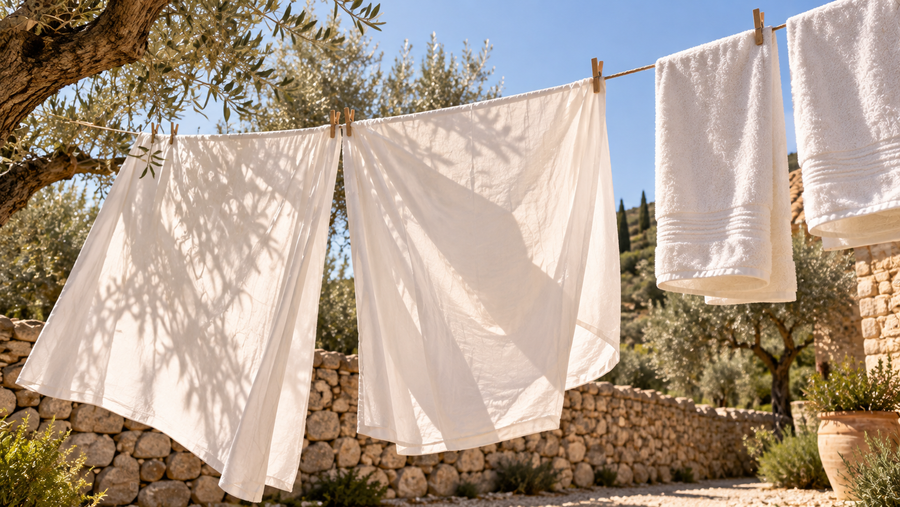
- Line dry outdoors whenever the weather allows. It is free, and sunlight bleaches whites.
- Indoors, use an airer plus a dehumidifier rather than radiators. A full load releases roughly two litres of water into the house, which is how damp starts.
- If you use a dryer, run it low and take clothes out slightly damp. Heat is what destroys elastane, melts synthetic fill and shrinks cotton.
- A heat pump dryer uses markedly less energy than a vented one and is gentler, though it takes longer.
- Clean the lint filter every load. A blocked filter adds twenty minutes to every cycle.
The detail is in how to dry clothes properly.
Washing less, without anyone noticing
Most clothes are washed because they have been worn, not because they are dirty, and those are different things. Learning to tell them apart is the change that saves the most energy, water and fabric life at once.
| Item | Realistic frequency |
|---|---|
| Jeans | Every 8 to 10 wears |
| Jumpers and knitwear | Every 4 to 6 wears, aired in between |
| Trousers and skirts | Every 3 to 5 wears |
| Shirts and T-shirts | Every wear, since they sit against skin |
| Bras | Every 2 to 3 wears |
| Pyjamas | Every 3 to 4 wears |
| Coats and jackets | Once or twice a season |
| Towels | Every 3 to 4 uses, dried fully between |
| Bed sheets | Weekly |
Airing works because most odour compounds are volatile and leave on their own given moving air. An hour by an open window does more for a jumper than another wash, and costs it nothing.
Reading a green claim
- "Plastic-free" usually means the packaging, not the contents. Worth having, but it is a packaging claim.
- "Plant-based" is not a measure of impact. Palm-derived surfactants are plant-based. Ask what share of the formula it refers to.
- "Biodegradable" needs a standard and a timeframe attached to mean anything. Most surfactants biodegrade eventually.
- Concentrated products genuinely reduce shipping weight, provided people dose them correctly, which is the catch. See how much detergent to use.
- Carbon neutral through offsets is not the same as low carbon. Both can be true; only one is a reduction.
- Compare like with like. A claim per wash and a claim per bottle are different numbers; a cheaper product you use twice as much of is not cheaper.
- Be sceptical of any product, ours included, that implies the detergent is the main lever. On the numbers, it is not. The temperature dial is.
Frequently asked questions
What is the most sustainable way to do laundry?
Wash cooler, run full loads and skip the tumble dryer. Heating water and tumble drying account for the overwhelming majority of the energy a wash uses, so those three changes matter far more than which detergent you buy. Beyond that, making clothes last longer has the single largest effect.
Does washing at 30 degrees really clean clothes?
Yes, for everyday soil. Modern enzyme detergents are formulated for cold water and most of what is on clothes is not grease. Keep 60 °C for towels, bedding, nappies and anything after illness, and 40 °C for white cotton shirts, where cold washing is what greys the collars.
Do microplastic washing bags actually work?
Reasonably well. A washing bag catches a meaningful share of shed fibres and reduces shedding by lowering friction inside the drum. An external filter plumbed into the outlet catches more but needs installing and cleaning. Washing full, cold and at a lower spin reduces shedding for free.
Is it better to air dry or use a dryer?
Air drying, clearly, on both energy and fabric life. A dryer typically uses several times the energy of the wash itself, and the heat is what shrinks cotton and destroys elastane. If you need a dryer, run it low, take clothes out slightly damp and keep the lint filter clean.
How often should you really wash clothes?
Jeans every eight to ten wears, knitwear every four to six with airing in between, trousers every three to five, bras every two to three, towels every three to four uses and sheets weekly. Shirts and T-shirts go every wear because they sit against skin. Most clothes are washed because they were worn, not because they are dirty.
Does eco detergent make much difference?
Less than the temperature dial, which is the uncomfortable answer. Detergent choice is a real but comparatively small lever next to heating water and tumble drying. Correct dosing matters more than brand, because overdosing sends surplus chemical to the drain and triggers extra rinse cycles.
Is the eco cycle on my machine worth using?
Yes, if you are not waiting for the load. It heats less and compensates with time and more drum movement, so it uses noticeably less energy and is gentler on fabric. The trade is that it takes three or four hours, so it is best started overnight.