Short answer: wash or dry clean everything before it goes away, store it completely dry, fold knitwear rather than hanging it, and use breathable cotton or canvas rather than plastic. Almost every storage disaster is decided before the box closes: moths come for body oil rather than wool, yellowing comes from plastic, and mildew comes from fabric that was not quite dry. Cedar and lavender help at the margins. Clean and dry is the whole game.
Before anything goes away
- Wash or dry clean every single item, including things worn once. Invisible sweat and body oil are what moths detect, and what oxidises into yellow stains over six months.
- Treat every stain now. A mark you can barely see in April is a permanent brown shadow in October, because sugars and oils oxidise in the dark.
- Make sure it is bone dry. Not nearly dry. Thick knitwear and coat linings hold moisture in the middle long after the surface feels right.
- Repair it before storing. A small hole becomes a large one, and a loose button is lost in a box. See mending small holes.
- Remove every plastic dry-cleaning bag. They trap residual solvent and moisture against the fabric and are the usual cause of a yellowed shoulder.
- Empty the pockets, and take belts out of loops so nothing presses a shape into the fabric for six months.
Fold or hang
| Item | Store | Why |
|---|---|---|
| Knitwear, jumpers, cardigans | Folded | Hanging stretches the shoulders permanently under its own weight |
| T-shirts and jersey | Folded | Jersey stretches at the hanger points |
| Jeans and trousers | Folded or over a bar | Either works. Avoid a sharp crease at the knee |
| Shirts | Hung | Folding sets creases into cotton poplin for the whole season |
| Suits and tailoring | Hung, broad wooden hanger | Shape is structural. Add a cotton garment bag |
| Coats | Hung, with space | Compressed wool loses loft and takes months to recover |
| Dresses, light | Hung | Padded hanger for anything with narrow straps |
| Beaded or heavily embellished | Folded flat with tissue | The weight pulls the thread out if it hangs |
| Swimwear and activewear | Folded | Elastane relaxes under its own weight when hung |
What to store it in
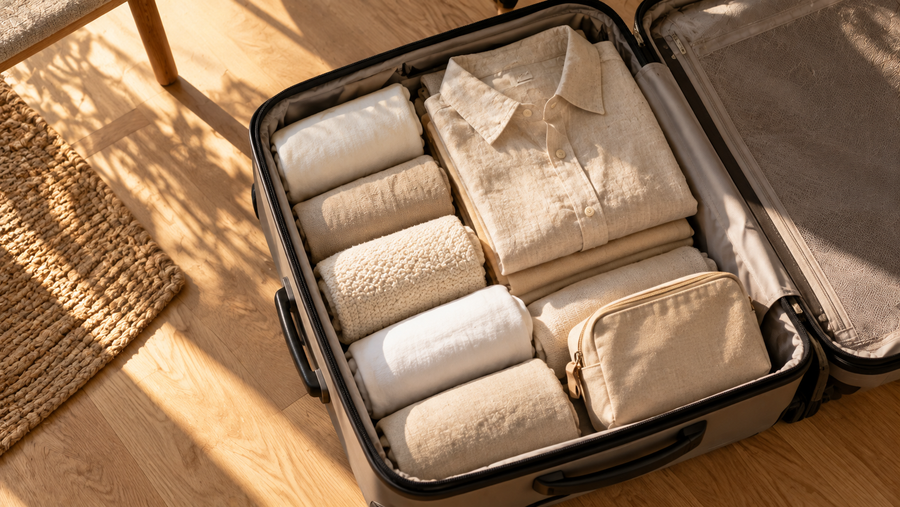
- Breathable cotton or canvas boxes and garment bags. The right default for nearly everything. Fabric needs to exchange air.
- Acid-free tissue between folds of anything fine, and inside the folds of silk, to soften the crease and prevent a permanent line.
- Under-bed boxes with lids, which are dark, stable in temperature and out of the way.
- Not plastic storage boxes, unless they are ventilated. Sealed plastic traps the moisture already in the fabric.
- Not cardboard directly against clothes. It is acidic and it yellows fabric over time. Line it with tissue.
- Not the loft, the garage or the basement. Temperature swings cause condensation, and condensation is mildew.
- Not vacuum bags for wool, cashmere or down, for the reason below.
Vacuum bags, honestly
They are excellent for bulky synthetics, spare bedding and anything you are storing for space rather than for preservation. They are poor for natural fibres. Compressing wool or down crushes the loft that makes it warm, and it can take weeks to recover, or never fully. Worse, a vacuum bag seals in whatever moisture the fabric already held, with no way for it to leave. If you use them, use them for duvets and synthetic coats, make sure everything is bone dry, and give the contents a day to breathe when you open them.
Moths, properly
Clothes moths eat keratin, so they target wool, cashmere, silk and felt. They find it by the body oil and sweat on it, which is why a clean jumper is a far less attractive target than one worn twice.
- Storing clean is 80 percent of moth prevention. Everything below is the other 20.
- Cedar and lavender deter moths from settling but do not kill larvae already present. Sand cedar lightly when the scent fades; replace lavender yearly.
- Naphthalene mothballs work and smell appalling for years afterwards, including in the wood of the wardrobe. Rarely worth the trade.
- A pheromone trap tells you whether you have a problem and how bad. Cheap, and worth running once a year.
- Vacuum the wardrobe floor, corners and the storage shelf. Larvae live in dust and lint as readily as in a jumper.
- If you find damage, 48 hours in a sealed bag in the freezer kills every life stage on that garment.
Taking it back out
- Unpack a week before you need it, not the morning of.
- Air everything on hangers with space, ideally near an open window. Storage smell is volatile and mostly leaves on its own.
- Shake and reshape knitwear and let it recover flat for a day if it was compressed.
- Check for damage in daylight. Moth holes are easier to repair early, and easier to see before you are wearing the thing.
- Steam rather than iron anything with a nap or a set crease. The method is in how to iron and steam clothes.
- Wash only what needs it. Most stored clothes need airing, not another cycle.
- If anything smells musty, something was stored damp. Treat it as in removing mould from fabric before it goes back in the wardrobe.
Frequently asked questions
Should you wash clothes before storing them?
Always, including items worn only once. Invisible sweat and body oil are exactly what attracts clothes moths, and over six months in the dark they oxidise into yellow or brown stains that will not come out. This single step prevents most storage damage.
Should you fold or hang clothes in storage?
Fold knitwear, jersey, swimwear and anything beaded, because hanging stretches them permanently under their own weight. Hang shirts, dresses, coats and tailoring, which crease badly folded and depend on their shape. Use broad wooden hangers and leave space between garments.
Are vacuum bags bad for clothes?
For wool, cashmere and down, yes. Compression crushes the loft that makes them warm and it can take weeks to recover, and the sealed bag traps whatever moisture the fabric already held. They are fine for bulky synthetics and spare bedding, provided everything is completely dry.
What should you store clothes in?
Breathable cotton or canvas boxes and garment bags, with acid-free tissue between folds of anything fine. Avoid sealed plastic, which traps moisture, bare cardboard, which is acidic and yellows fabric, and plastic dry-cleaning bags, which are the usual cause of yellowed shoulders.
Do cedar and lavender actually stop moths?
They deter moths from settling but do not kill larvae already in a garment. The thing that genuinely protects wool is storing it clean, since moths are attracted by sweat and body oil rather than the fibre itself. If you find damage, 48 hours in a sealed bag in the freezer kills every life stage.
Where should you not store clothes?
Lofts, garages and basements. The temperature swings cause condensation inside the packaging, and condensation means mildew. Store textiles somewhere dark, dry and stable in temperature, such as under a bed or on a wardrobe shelf.
Why do stored clothes smell musty?
Because something went away not quite dry, or the storage space is humid. Thick knitwear and coat linings hold moisture in the middle long after the surface feels dry. Air the items thoroughly first, and if the smell persists treat it as mildew rather than trying to cover it.