Short answer: wash jeans every eight to ten wears, inside out, cold, on a short gentle cycle, with nothing abrasive in the load, and line dry them. The dryer is what kills denim: heat shrinks the cotton, destroys the elastane in stretch jeans and fades the indigo at every crease. Washing jeans is not what ages them badly. Washing them hot and tumbling them dry is.
How often
| Type | Wash after | Why |
|---|---|---|
| Everyday cotton jeans | 8 to 10 wears | Enough to clear body oil, rare enough to keep the colour |
| Stretch jeans with elastane | 4 to 6 wears | Elastane holds oil, and the fit relaxes between washes anyway |
| Raw or selvedge denim | First wash at 3 to 6 months, then every 10 wears | Delaying the first wash is what creates the fade pattern |
| White or pale denim | 2 to 3 wears | Marks set quickly and show immediately |
| Any jeans, after sport or a spill | Immediately | Sweat and sugar both set |
The method
- Turn them inside out. The abrasion of the drum then happens on the inside face, which is what protects the colour. Most of what people call fading is a roughened surface, as explained in how to wash black clothes.
- Zip the fly and fasten the button. An open zip is a cheese grater for everything else in the drum.
- Wash denim with denim, or at least with nothing pale and nothing that sheds. Never with towels.
- Cold, 20 °C, short gentle cycle. Enzymes work cold; see does cold water actually clean clothes.
- One pod, no fabric softener and no bleach. Softener coats the cotton and dulls indigo.
- Spin low, 600 to 800 rpm. High spin presses permanent creases into heavy cotton.
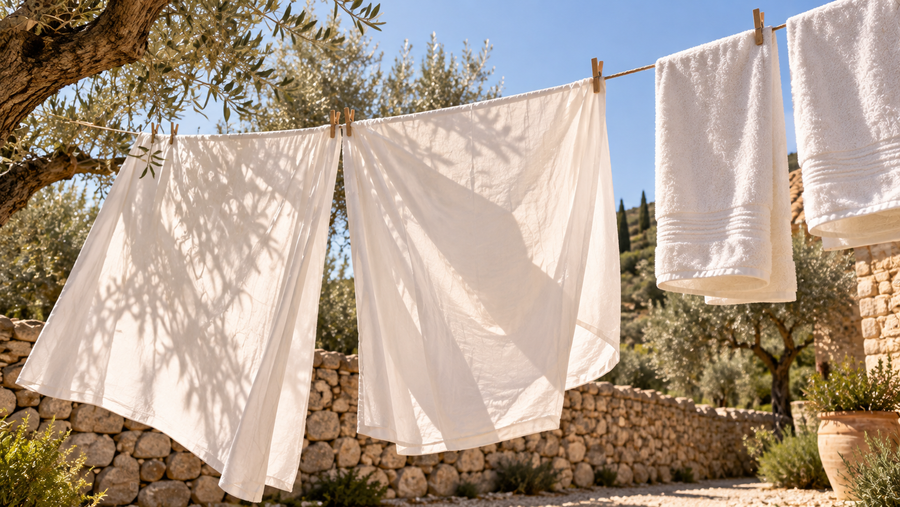
- Line dry, inside out, away from direct sun. Hang from the waistband, not the hem; the weight of the wet leg pulls the fit straight.
- If you must tumble, use low heat, take them out damp, and pull them back into shape by hand while they finish drying.
Raw and selvedge denim
Raw denim arrives unwashed and untreated, and the fades on the thigh, the knee and the back pocket come from the indigo wearing where you move. Washing early washes away the contrast before it has formed.
- Delay the first wash three to six months, depending on how hard you wear them. Not two years; that is folklore and it is hard on the fabric.
- For the first wash, soak in a bath of cold water with a small amount of dissolved detergent for 30 to 45 minutes, agitating gently by hand. Rinse and hang to dry.
- Expect indigo in the water and 1 to 3 percent shrinkage if they are sanforized, more if they are not.
- After the first wash, machine wash cold and inside out every ten wears or so.
- Spot-clean spills immediately rather than running a whole wash.
The freezer myth
Freezing jeans does not clean them. Low temperature makes bacteria dormant, so the smell fades briefly, but the bacteria revive at body temperature within hours and the body oil they feed on is still in the fibre. Airing outdoors for a day genuinely helps; a night in the freezer mostly just chills your jeans. The real mechanism behind fabric odour is in why do my clothes still smell after washing.
Common problems
| Problem | Cause | Fix |
|---|---|---|
| Jeans got tighter | Hot wash or hot dryer | They relax within an hour of wear. Wash cold next time |
| Knees and seat gone baggy | Elastane fatigue between washes | Cold wash and line dry restores most of it |
| Waistband stretched permanently | Elastane cooked in a hot dryer | Not reversible |
| White marks at the creases | Abrasion, not residue | Wash inside out from now on |
| Indigo transferring to sofas and bags | Loose dye on new or raw denim | One cold soak with 60 ml of white vinegar, then rinse |
| Stiff and board-like after line drying | Hard water and air drying | Tumble five minutes on low to soften, or see the hard water guide |
Keeping them fresh between washes
- Air them overnight over a chair rather than folding them into a drawer warm.
- Hang them outside for a few hours on a dry day; moving air removes far more odour than anything else.
- Spot-clean marks the same day with a damp cloth and a dissolved drop of detergent.
- Rotate two pairs. Denim worn daily never gets the chance to dry out and recover.
- Store folded, not crammed. Permanent creases form where heavy cotton is compressed.
Frequently asked questions
How often should you wash jeans?
Every eight to ten wears for everyday cotton jeans, every four to six for stretch jeans with elastane, and immediately after sport or a spill. Raw denim is usually left three to six months before its first wash, then washed every ten wears or so.
Should you wash jeans in hot or cold water?
Cold, around 20 degrees Celsius. Hot water shrinks the cotton, fades indigo faster and degrades the elastane in stretch denim. Enzyme detergents clean perfectly well cold.
Should you wash jeans inside out?
Yes, always. Most denim fading is the fibre surface being roughened by the drum, so turning them inside out moves that abrasion to the side nobody sees. Zip and button them too, so the hardware does not damage the rest of the load.
Can you put jeans in the dryer?
You can, but it is the main cause of shrinkage, lost stretch and crease fading. If you use one, keep the heat low, take them out while damp and reshape them by hand. Line drying inside out, hung from the waistband, is better.
Does putting jeans in the freezer clean them?
No. Cold makes bacteria dormant, so the smell drops briefly, but they revive at body temperature and the body oil feeding them is still there. Airing outdoors for a day works far better; a wash is the only thing that actually cleans them.
How do you stop jeans from fading?
Wash inside out, cold, on a short gentle cycle with no bleach or softener, keep them away from direct sun and skip the dryer. Washing less often also helps, but not washing at all does not: body oil dulls denim too.
How do you stop new jeans transferring dye?
Soak them once in cold water with 60 ml of white vinegar for 30 minutes, then rinse and wash cold and alone. It does not set the dye, but it clears the loose excess that rubs off onto car seats and sofas.