Short answer: jeans every 5 to 10 wears, jumpers every 3 to 5, T-shirts and underwear every wear, bras every 2 to 3, bath towels every 3 uses, bed sheets weekly, pillows twice a year. Frequency is decided by three things only: how much skin the garment touches, how much it sweats into, and whether it is visibly soiled. Everything else is habit. Washing less often is better for almost every garment, as long as you air it properly between wears.
Why most people wash too often
A wash cycle is mechanical work. Agitation, water and detergent do the cleaning, and they also abrade fibres, fade dye and relax elastane a little every time. The lint in your dryer filter is your clothes, leaving. Cutting a garment from twenty washes a year to eight does more for how long it lasts than any detergent choice, any temperature and any amount of care.
The reverse is true for anything that absorbs moisture and sits in a warm room. Towels, bath mats, pillowcases and sheets are habitats, not garments, and under-washing them is the usual reason a bedroom smells faintly of something and nobody can place it.
The frequency table
| Item | Wash after | Why |
|---|---|---|
| Underwear and socks | Every wear | Direct skin contact, no exceptions |
| T-shirts and vests worn next to skin | Every wear | Absorbs sweat and body oil directly |
| Gym and activewear | Every wear, promptly | Synthetics hold odour bacteria. Do not leave it in the bag |
| Bras | 2 to 3 wears | Body oil degrades elastane. Rotate three so each rests |
| Shirts and blouses | 1 to 2 wears | Collar and cuffs pick up oil even when the body looks clean |
| Jumpers and knitwear | 3 to 5 wears | Worn over a layer. Wool is self-freshening if aired |
| Jeans | 5 to 10 wears | Washing is what fades them and loosens the fit |
| Trousers and chinos | 3 to 5 wears | Spot-clean the knee and seat instead |
| Skirts and dresses | 2 to 4 wears | Depends on lining and what you wore under it |
| Pyjamas | 3 to 4 wears | Clean skin, but you sweat in them. Weekly in summer |
| Suits and tailoring | 2 to 3 times a year | Brush and steam between. Dry clean sparingly |
| Coats and winter jackets | Once or twice a season | Washing strips water repellency and loft |
| Swimwear | Every wear, rinse immediately | Chlorine and salt destroy elastane within hours |
| Bed sheets and pillowcases | Weekly | Eight hours a night of skin, oil and moisture |
| Duvet cover | Every 1 to 2 weeks | Weekly if you sleep without a top sheet |
| Bath towels | Every 3 uses | Damp and warm. Any longer and it sours |
| Hand towels | Every 2 days | Used far more often than a bath towel |
| Bath mat | Weekly | The most under-washed thing in most houses |
| Tea towels and dishcloths | Every 1 to 2 days | Food residue. Wash hot |
| Duvet and blankets | Every 3 to 6 months | More often with pets on the bed |
| Pillows | Every 6 months | Yes, the pillow itself, not just the case |
| Mattress protector | Every 2 months | The reason a mattress stays usable |
| Cushion covers and curtains | Twice a year | Covered in full in the soft furnishings guide |
What actually decides the number
Ignore the garment and ask three questions. If the answer to all three is no, it does not need washing yet, whatever the calendar says.
- Did it touch skin directly? Underwear, socks, T-shirts worn alone and anything next to an armpit is a one-wear item. A jumper worn over a shirt is not.
- Did you sweat in it? Sweat itself is nearly odourless; the smell is bacteria feeding on it, and in synthetics that process starts within hours. This is why a gym top needs washing and a wool jumper worn on a cold day does not.
- Can you see or smell anything? A mark, a cuff that has gone grey, a collar that smells of skin when you hold it up. If yes, wash it, and treat the mark first using the stain-by-stain guide.
The ninety seconds that replace a wash
Almost everything in the 3-to-10-wear band stays wearable because of what you do when you take it off, not what you do in the machine.
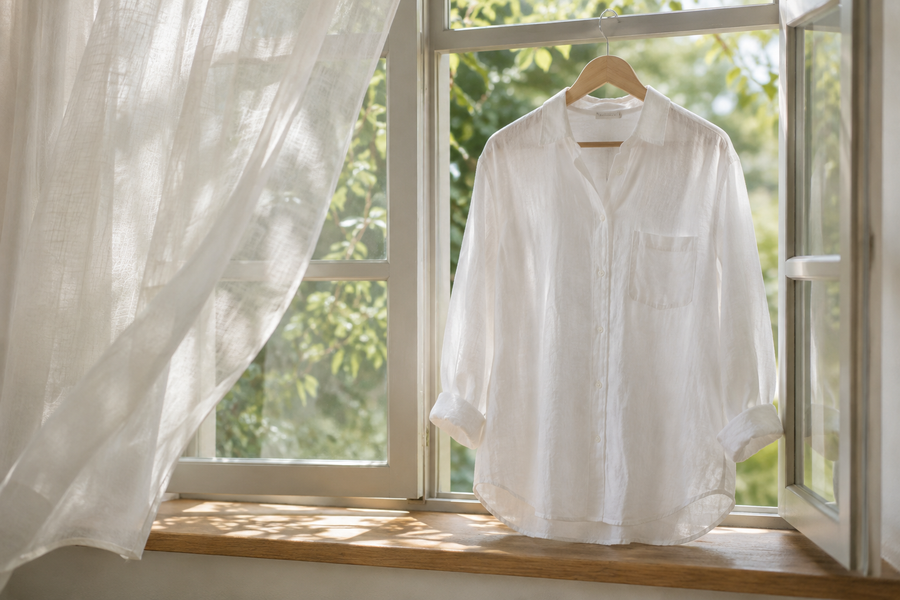
- Hang it in open air for a few hours before it goes away. Not in the wardrobe, not on the floor. Most body odour is volatile and leaves on its own if the garment can breathe.
- Turn knitwear inside out and lay it flat overnight. Wool genuinely recovers; that is a property of the fibre, not a myth.
- Spot-clean the one mark with cold water and a little detergent on a cloth rather than washing the whole garment for a splash of coffee.
- Brush tailoring and coats in the direction of the nap. It removes the dust and skin that would otherwise become a smell.
- Never put anything away damp. Four hours folded in a drawer is all a musty smell needs, as covered in removing mould from fabric.
Where fragrance fits: the point of a scent that lasts is that a garment smells like something on wear three, not just out of the machine. That only works if the wash itself laid the fragrance into the fibre properly — a full dose of a Golden Veil pod in a correctly loaded drum, not a half dose in a drum packed tight. The mechanism is in making laundry smell good for weeks.
The three signals that override everything
Wash immediately, whatever the wear count, if any of these are true.
- Someone in the house is ill. Separate load, hot wash, and the full routine in sanitising laundry.
- It smells when dry and at rest. Not after exercise, not warm from your body. A garment that smells sitting on a chair has a bacterial load airing will not fix.
- There is anything biological, greasy or sugary on it. Sugar caramelises and sets, oil oxidises and goes permanent. Time is the enemy, not dirt.
A weekly rota that works
Three loads a week covers two adults without anything piling up or sitting damp.
| Day | Load | Settings |
|---|---|---|
| Midweek | Everyday darks: T-shirts, underwear, jeans if due | Cold, normal cycle |
| Weekend day one | Bedding and towels | 40°C or warm, high spin |
| Weekend day two | Lights, shirts, delicates in a mesh bag | Cold, low spin for delicates |
| As needed | Activewear, same day as worn | Cold, no softener |
| Monthly | Empty machine maintenance wash | See cleaning a washing machine |
Common problems
| Problem | Cause | Fix |
|---|---|---|
| Clothes look worn out within a year | Washing every wear out of habit | Air instead. Cut the frequency on anything worn over a layer |
| Towels sour after two days | Three people on one towel, or it never fully dries | One towel each, spread out flat, not folded on a hook |
| Bedroom smells faintly stale | Pillows, duvet or mattress protector, not the sheets | Wash the pillows and duvet |
| Jeans baggy after a few months | Washed too often and hot | Cold, inside out, every 5 to 10 wears. See washing jeans |
| Bras lose their shape quickly | Washed every wear, or tumble dried | Rotate three, wash every 2 to 3 wears, never tumble |
| Gym kit smells even after washing | Left damp in a bag, then washed cold with softener | Wash same day, no softener, method in sweat smell |
| Scent gone by the second wear | Underdosed, or drum packed too full | Full dose, drum two-thirds full. See how much detergent |
Frequently asked questions
How often should you wash jeans?
Every 5 to 10 wears for most people, and longer for raw denim. Washing is the main thing that fades denim and loosens the fit, so the less often the better. Air them after each wear, spot-clean marks, and wash cold and inside out when they genuinely need it.
How often should you change bed sheets?
Weekly. You spend around eight hours a night in contact with them, leaving skin, body oil and moisture behind, and that builds up faster than almost anything else in the house. Stretch to ten days in winter if you shower before bed, but not longer.
How often should you wash a bath towel?
After about three uses, and only if it dries fully between them. A towel is damp, warm and loaded with skin cells, which is exactly what souring needs. Spread it out flat rather than folding it on a hook, and give each person their own.
How often should you wash a bra?
Every two to three wears, rotating at least three so each one rests a day between wears. Body oil breaks down elastane, so washing too rarely ruins the shape, but washing every single wear wears out the elastic faster than it needs to.
Do you need to wash pyjamas every day?
No. Three to four wears is reasonable for most people, because you put them on clean skin. Wash weekly in summer, or if you sweat at night, and more often for children.
Does washing clothes less often make them last longer?
Yes, substantially. Every cycle abrades fibres, fades dye and relaxes elastane slightly. Halving the number of washes a garment sees in its life does more for how long it lasts than any choice of detergent, temperature or care routine.
How often should you wash pillows?
The pillows themselves, not just the cases, roughly every six months, and the mattress protector every two months. Most pillows take a warm wash on a gentle cycle with two rinses, and need to dry fully before use.
What if a garment smells but looks clean?
Wash it. A garment that smells when dry and at rest, rather than warm from your body, has a bacterial load that airing will not remove. If the smell survives washing, the problem is the method rather than the frequency, which is covered in why clothes still smell after washing.