Short answer: clothes shrink for three different reasons, and only one is reversible. Relaxation shrinkage happens the first time fabric gets wet and tension from manufacturing releases, and it is permanent but small. Felting happens when wool meets heat and agitation, and it is permanent. Consolidation happens when heat tightens the weave, and that one often comes back with a lukewarm soak in hair conditioner and gentle stretching. Work out which you have before you try to fix it.
The three kinds of shrinking
| Type | What happened | Reversible? |
|---|---|---|
| Relaxation | First wash releases the tension put into the yarn at the mill | No, but it is only 1 to 4 percent |
| Consolidation | Heat and tumbling pulled the weave tighter | Often yes, with a soak and stretching |
| Felting | Wool scales opened in heat and locked together under agitation | No. The fibre structure has changed |
The practical test: if the jumper is smaller and the surface looks denser, fuzzier and more like felt than knit, it has felted and no method brings it back. If it is simply smaller but the knit still looks like knit, it is consolidation and you have a good chance.
How much each fibre shrinks
| Fibre | Typical first-wash shrinkage | Where the risk is |
|---|---|---|
| Cotton, untreated | 3 to 5 percent | Hot wash, hot dryer |
| Cotton, pre-shrunk | 1 to 2 percent | High dryer heat only |
| Linen | 3 to 4 percent | First wash, then stable |
| Wool and cashmere | Up to 30 percent if felted | Heat plus agitation, not water |
| Silk | 2 to 3 percent | Hot water |
| Viscose and rayon | 5 to 10 percent | Any wash; it is the least stable fibre you own |
| Polyester and nylon | Almost none | Only melts or distorts at high heat |
| Cotton and elastane blends | 2 to 4 percent, plus lost stretch | High dryer heat kills the elastane first |
The rescue: the relaxing soak
This works on consolidation shrinkage in cotton, cotton blends and lightly shrunk wool. It will not reverse felting.
- Fill a basin with lukewarm water, around 30 °C. Not hot: heat is what caused this.
- Add two tablespoons of hair conditioner or a wool wash and stir until it disperses. The conditioner coats the fibres and lets them slide past each other again.
- Submerge the garment and leave it 30 minutes. Press it under occasionally; do not agitate.
- Lift it out and squeeze gently. Do not rinse, and never wring.
- Press it between two towels, then lay it on a dry towel.
- Stretch it back in stages: pull gently from hem to shoulder, then across the chest, then the sleeves, every ten minutes as it dries. Work in small pulls rather than one hard one.
- For a precise result, pin the edges to the towel at the measurements you want and let it dry fully pinned. This is called blocking, and it is what knitters do.
Expect to recover most of the loss, not all of it. A jumper that went from a large to a small usually comes back to a medium.
What to do with a felted jumper
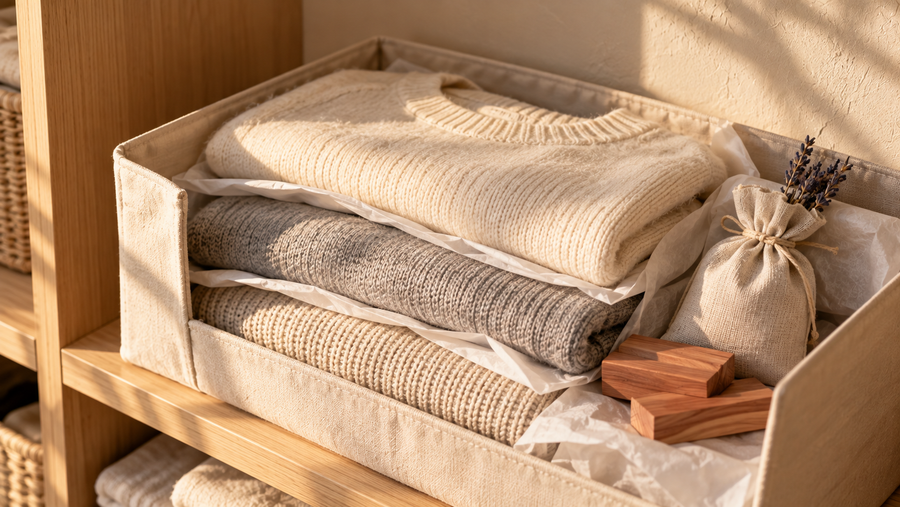
Nothing restores it, so the honest options are: wear it as a cropped or fitted piece, pass it to someone smaller, or cut it up. Felted wool does not fray, which makes it genuinely useful for drawer sachets, pot holders or dryer-safe cleaning cloths. That is a better end than the bin.
The method that stops it happening to the next one is in how to wash wool, cashmere, silk and linen: 20 °C, 400 to 600 rpm, dry flat.
Five habits that prevent it entirely
- Wash cold. Heat is the common factor in every type of shrinkage except relaxation. The case is in does cold water actually clean clothes.
- Dry on low, or not at all. The dryer causes more shrinkage than the washer does, every time.
- Take the load out slightly damp and hang it. The last ten minutes of a hot cycle do most of the damage.
- Read the bars before the colour. Two bars means minimum agitation, which is what protects wool. The decoder is in laundry symbols explained.
- Buy for the first wash. With untreated cotton and viscose, assume you will lose 3 to 5 percent and size accordingly.
Can you shrink something on purpose?
Sometimes, and only with cotton or cotton blends. Wash hot, dry hot, and accept that you cannot control where the shrinkage lands: a shirt usually shortens more than it narrows, which is rarely what anyone wants. Wool will felt rather than shrink evenly. If the fit matters, a tailor costs less than the garment.
Frequently asked questions
Why do clothes shrink in the dryer?
Heat relaxes the tension held in the yarn and the tumbling consolidates the weave, so the fabric pulls in on itself. In wool, heat also opens the scales on the fibre and agitation locks them together, which is felting. The dryer causes more shrinkage than the washing machine does.
How do you unshrink a jumper?
Soak it for 30 minutes in lukewarm water with two tablespoons of hair conditioner or wool wash, squeeze gently without rinsing, press it between towels and then stretch it back in small stages as it dries, pinning the edges to a towel for a precise size. This works on consolidation shrinkage; it will not reverse felting.
Can you unshrink wool that has felted?
No. Felting changes the structure of the fibre as the scales interlock permanently. If the surface looks dense and fuzzy rather than knitted, it is felted. Felted wool does not fray, so it is worth cutting up for sachets or cleaning cloths rather than binning.
Does cotton shrink every time you wash it?
No. Untreated cotton loses 3 to 5 percent on the first wash and very little afterwards, and pre-shrunk cotton loses 1 to 2 percent. Continued shrinking usually means the dryer is running too hot.
What fabric shrinks the most?
Viscose and rayon, at 5 to 10 percent, because the fibre is weak and unstable when wet. Wool can lose up to 30 percent, but through felting rather than ordinary shrinkage. Polyester and nylon barely shrink at all.
How do you stop clothes from shrinking?
Wash cold, dry on low or air dry, remove the load while slightly damp, and follow the bars on the care label rather than sorting only by colour. Heat is the common cause in almost every case.
Does cold water shrink clothes?
Barely. The relaxation shrinkage of a first wash happens at any temperature, but it is small and happens once. Everything beyond that is caused by heat and agitation, which is why a cold wash and a low dry keep a garment the size you bought it.