Short answer: wrinkles are set by three things together — heat, pressure and time. A hot dryer sets them, a full basket presses them in, and every hour they sit there makes them harder to remove. The fastest fix with no iron is ten minutes in the dryer on low with one damp cloth. The best long-term fix is taking the load out slightly damp and hanging it immediately, which removes the problem instead of solving it.
Six ways to remove creases without an iron
| Method | Time | Best for |
|---|---|---|
| Dryer with a damp cloth | 10 minutes | Almost everything. The most reliable method here |
| Hanging in a steamy bathroom | 15 to 20 minutes | Light creasing on shirts, dresses, travel clothes |
| Spray with water and shake | 20 minutes to dry | Cotton and linen with soft, rolling creases |
| Damp towel and hands | 5 minutes | Spot creases on a collar, lapel or hem |
| Flat under a mattress overnight | 8 hours | Trouser creases and folded hems, if you have time |
| Handheld steamer | 2 to 5 minutes | Everything, including wool and silk you cannot press |
The dryer method, in detail
- Put the creased garment into the dryer with one clean cloth wrung out in water, or a handful of ice cubes.
- Run ten minutes on low. The moisture becomes steam and relaxes the fibres.
- Take the garment out immediately, while it is warm and faintly damp.
- Shake it out hard and hang it on a wide hanger. The weight of the fabric finishes the job as it cools.
The step people skip is the last one. Fabric sets as it cools, so whatever shape it is in at that moment is the shape it keeps.
Steamer or iron?
| Steamer | Iron | |
|---|---|---|
| How it works | Relaxes fibres with moisture, no pressure | Flattens with heat and direct pressure |
| Best on | Wool, silk, knits, polyester, hanging garments | Cotton, linen, anything that needs a sharp edge |
| Speed | Faster per garment, no board | Slower set-up, faster on a pile of shirts |
| Risk | Very low; it rarely marks fabric | Scorching, shine on dark wool, melted synthetics |
| Creases | Cannot make one | The only way to get a true pressed crease |
For most wardrobes a steamer covers 90 percent of the need and an iron covers shirts and anything tailored. If you own one, own a steamer.
If you are ironing
- Iron damp. Slightly damp fabric presses in half the passes. Spray if it has dried.
- Match the dots on the label: one dot up to about 110 °C for synthetics, two up to 150 °C for silk and wool blends, three up to 200 °C for cotton and linen. The decoder is in laundry symbols explained.
- Work coolest first, so the plate heats up through the pile rather than cooling down.
- Use a pressing cloth on dark wool, silk and anything with a sheen. It prevents the shiny patch that never comes out.
- Iron inside out on prints, embroidery and dark colours.
- Hang it straight away and let it cool on the hanger, not folded on the bed.
The three habits that prevent wrinkles
- Fill the drum three quarters, never more. Compressed fabric creases in the spin, and those creases are then baked in by the dryer. The load-size rule is in how to do laundry.
- Use a lower spin for anything that creases. 600 to 800 rpm on linen and shirts leaves them wetter and far smoother.
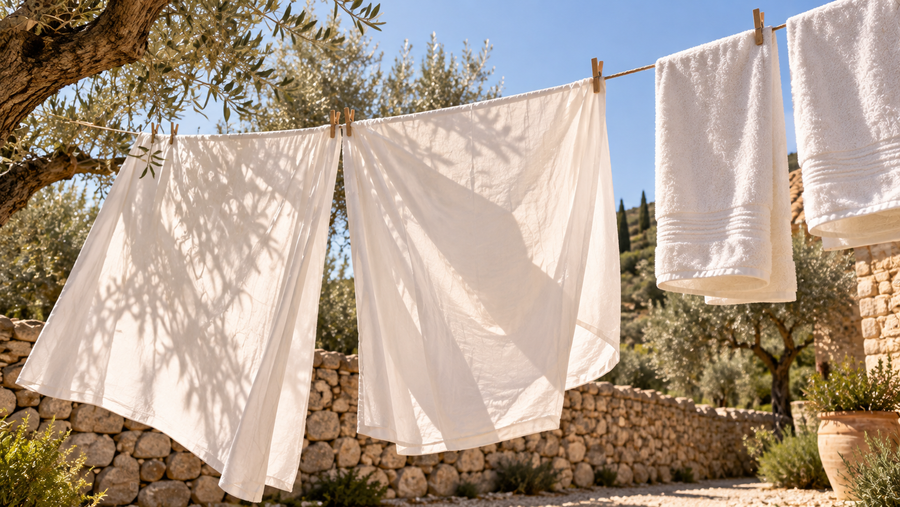
- Take the load out damp and hang it immediately. This single habit removes most ironing from a household. A dryer sheet helps too, because much of what reads as creasing on synthetics is static holding the fabric against itself, as covered in how to get rid of static cling.
Fabrics that behave differently
- Linen creases by nature and always will. Shake it out wet, hang it, and accept the rest; that texture is the point of linen.
- Polyester barely creases, and when it does the cause is heat. Never iron it hot; steam it instead.
- Wool drops its own creases if you hang it overnight in a humid room. It rarely needs anything else.
- Viscose creases easily and marks with a hot iron. Steam it, or iron on two dots through a cloth.
- Cotton shirts are the one case where an iron genuinely wins, because only pressure gives a flat placket and a sharp collar.
Frequently asked questions
How do you get wrinkles out of clothes without an iron?
Put the garment in the dryer with one damp cloth or a few ice cubes and run ten minutes on low, then take it out warm, shake it hard and hang it immediately. Alternatives are hanging it in a steamy bathroom for 15 to 20 minutes, misting it with water and shaking it out, or using a handheld steamer.
Does hanging clothes in the bathroom remove wrinkles?
Yes, for light creasing. Hang the garment away from direct water while a hot shower runs for 15 to 20 minutes, then smooth it with your hands and leave it to dry on the hanger. It will not remove a sharp folded crease from cotton.
Is a steamer better than an iron?
For most wardrobes, yes. A steamer relaxes fibres with moisture and no pressure, which suits wool, silk, knits and synthetics, and it is faster because there is no board. An iron is still the only way to get a sharp crease or a flat shirt collar.
Why do my clothes come out of the dryer so wrinkled?
Because the load was too big, the heat was too high, or it sat in the drum after the cycle ended. Fabric sets in whatever shape it holds as it cools, so a load left warm in a heap sets creased.
What temperature should I iron at?
Follow the dots on the care label: one dot is up to about 110 degrees Celsius for synthetics, two dots up to 150 for silk and wool blends, and three dots up to 200 for cotton and linen. Iron while the fabric is slightly damp and use a pressing cloth on dark or shiny fabrics.
How do you keep clothes from wrinkling in the wash?
Fill the drum no more than three quarters, use a lower spin of 600 to 800 rpm for shirts and linen, and remove the load while it is still slightly damp so you can shake it out and hang it straight away.
Do dryer sheets help with wrinkles?
Indirectly, yes. Much of what looks like creasing on synthetics is static holding the fabric against itself, and a dryer sheet removes that. It will not take a set crease out of cotton.