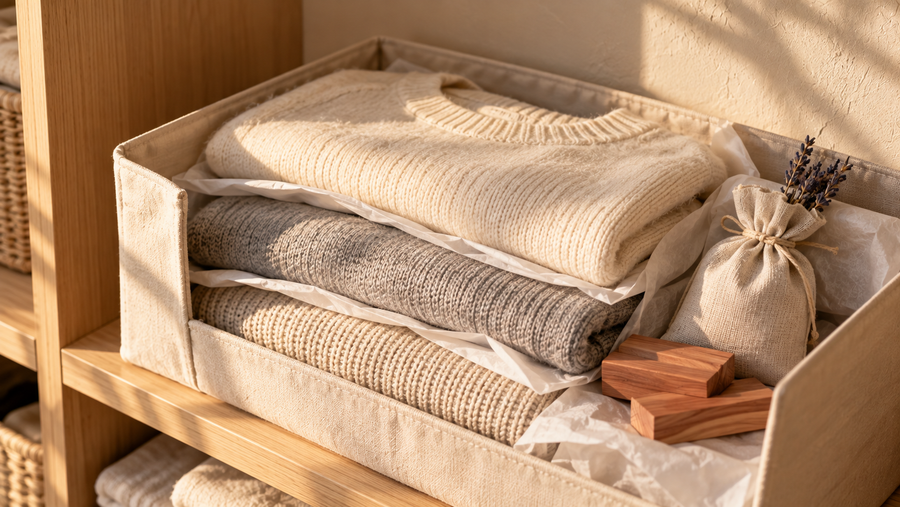
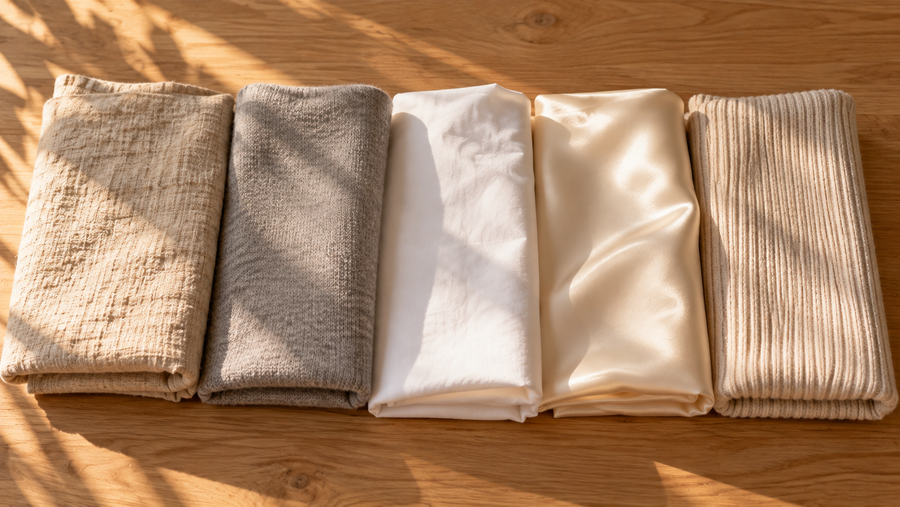
Short answer: a great many "dry clean only" labels are legal caution rather than a real limit, and the usual candidates — unlined wool knitwear, silk blouses, viscose dresses, cotton and linen with a lining — wash at home by hand in cold water. Four things genuinely rule out water: tailored construction with interlining, leather or suede, anything pleated or glued, and dyes that are visibly unstable. If a garment has none of those four, the label is probably protecting the manufacturer, not the fabric.
What does "dry clean only" actually mean?
Dry cleaning is washing in a solvent instead of water. The machine tumbles garments in perchloroethylene or a hydrocarbon solvent, which dissolves oil and grease well, barely swells fibres and does not relax the tensions a tailor built into a jacket. That is its real advantage: it does not change the shape of structured clothing. It is markedly worse than water at anything water-soluble, which is most sweat, most food, wine, coffee and all salt.
Manufacturers are required to list one safe method, not every safe method. Printing "dry clean only" costs them nothing and removes all liability, so it appears on a great deal of clothing that would survive a hand wash without complaint. It also appears on clothing that genuinely would not. The label does not distinguish between the two, so you have to.
The four things that genuinely rule out water
| Feature | Why water fails | How to spot it |
|---|---|---|
| Tailored construction | Canvas, interlining, shoulder pads and the outer fabric all shrink by different amounts, and the garment never sits straight again | A jacket, a blazer, a structured coat, anything with a shaped shoulder or a lapel that holds a roll |
| Leather, suede or fur trim | Water strips the oils, the hide dries hard and the colour goes patchy | A collar, cuffs, elbow patches, a belt that cannot be removed |
| Pleats, glued seams or fused panels | Permanent pleats are heat-set and relax in water; adhesives soften and bubble | Sharp accordion pleats, a seamless hem, a stiff shirt collar that has no stitching |
| Unstable dye | Deep saturated colour on silk, or a print on a pale ground, bleeds the moment it is wet | Press a damp white cloth hard against an inside seam. Any colour transfer means no |
Garment by garment
| Item | Verdict | Notes |
|---|---|---|
| Wool or cashmere jumper | Wash at home | Hand wash cold, no agitation, dry flat. See washing wool, cashmere, silk and linen |
| Silk blouse or scarf | Wash at home, after a dye test | Cold, three minutes, no wringing. Dark dyes are the only real risk |
| Viscose, rayon or modal dress | Wash at home, carefully | Loses most of its strength when wet. Support the weight, never hang it dripping |
| Unlined linen or cotton dress | Wash at home | Machine, cold, gentle. The label is pure caution |
| Polyester party dress | Wash at home | Unless beaded or sequinned, in which case hand wash and lay flat |
| Wool trousers | Borderline | Flat-front unlined ones survive a hand wash. Lined or pleated ones do not |
| Blazer or suit jacket | Dry clean | Interlining. There is no home method that preserves the shape |
| Structured coat | Dry clean | Same reason. See how to wash a winter coat for which coats are the exception |
| Pleated skirt | Dry clean | Heat-set pleats do not survive water |
| Anything with leather trim | Dry clean | Or remove the trim if it unbuttons |
| Sequinned or heavily beaded | Dry clean | The thread holding them is usually the weak point, not the fabric |
| Wedding dress | Specialist | Not a decision to make over a sink |
The home method
- Test the dye first. Wet a cotton bud, press it to an inside seam for ten seconds, then press a white cloth against it. Colour on the cloth ends the experiment.
- Fill a basin with cold water. Not warm. Cold water limits dye bleed and fibre swelling, which is where shrinkage comes from.
- Dissolve the detergent before the garment goes in. A small amount, fully dispersed. Concentrated detergent sitting on silk leaves a ring.
- Submerge and press, do not agitate. Open and close your hand around the fabric. Rubbing is what felts wool and breaks viscose.
- Three to five minutes, no longer. Prolonged soaking is what moves dye from one part of a garment to another.
- Rinse in two changes of cold water until the water runs clear. Residue in protein fibres is what makes them feel rough when dry.
- Press the water out between towels. Never wring, never twist, never hold a wet garment up by the shoulders.
- Dry flat, away from sun and radiators. Reshape to the original measurements while it is damp. Knitwear takes a day or two, and it should.
When you should pay for dry cleaning
- Anything tailored, every time. A suit jacket cleaned twice a year lasts a decade; washed once, it is finished.
- An oil or grease stain that water has already failed on. Solvent is genuinely better at this.
- Before long-term storage, so you are not storing body oil, which attracts moths.
- After a stain you cannot identify, because a second wrong attempt usually sets it.
- Anything you would be upset to lose. The cost of cleaning is always less than the cost of being wrong.
What dry cleaning does not do
It does not remove water-soluble marks reliably: sweat, salt, wine, coffee, juice and most sugar. A cleaner can spot-treat those by hand, but the solvent cycle itself walks straight past them, which is why a garment can come back smelling clean with the stain still visible. It also does not remove odour especially well, because odour lives in the water-soluble residue. If a wool jumper smells of a restaurant, airing it on a hanger for a day does more than a dry clean does, and the mechanism is explained in why clothes still smell after washing.
Common problems
| Problem | Cause | Fix |
|---|---|---|
| Jumper came out smaller and dense | Warm water plus agitation felted the wool | Conditioner soak and a careful stretch recovers some of it, not all |
| Viscose dress is two sizes shorter | Viscose shrinks on first wetting, permanently | Steam and pull gently back to length while damp. Partial recovery only |
| Silk feels papery | Detergent residue, or water too warm | Rinse again in cold water with a teaspoon of white vinegar, then dry flat |
| Lining puckered, outer fabric fine | The two layers shrank by different amounts | A tailor can sometimes release and re-hang the lining |
| Water ring around where the mark was | Spot-cleaning with water on silk or wool | Wash the whole panel, or the whole garment. Rings come from partial wetting |
| Colour ran onto a pale section | Soaked too long | Rewash immediately while still wet, cold, with detergent. Once dried, it is set |
| Garment smells of solvent after cleaning | Incomplete drying at the cleaner | Air it uncovered for 48 hours. Remove the plastic bag the day you get it home |
Frequently asked questions
Can you wash dry clean only clothes at home?
Often yes. Unlined knitwear, silk blouses, viscose dresses and unlined cotton or linen usually hand wash in cold water without trouble. The real exclusions are tailored garments with interlining, leather or suede, heat-set pleats or glued seams, and dyes that bleed on a damp cloth test.
What does dry cleaning actually do?
It washes clothes in a solvent rather than water. Solvent dissolves oil and grease well and does not swell fibres, so structured garments keep their shape. It is worse than water at anything water-soluble, including sweat, salt, wine and most food stains, which have to be spot-treated by hand.
Why do manufacturers label everything dry clean only?
Because they only have to list one method that works, and recommending the most cautious one removes their liability. It costs nothing to print and prevents complaints, so it appears on a great deal of clothing that would wash perfectly well.
How do you know if a garment will bleed?
Dampen a cotton bud, hold it against an inside seam for ten seconds, then press a white cloth firmly onto the damp spot. If any colour transfers, do not put the garment in water. This matters most with saturated silk and dark prints on pale grounds.
Can you wash a suit jacket at home?
No. A jacket is built from an outer fabric, a canvas or fused interlining, a lining and padding, all of which shrink at different rates in water. The shoulder and lapel shape comes from those layers working together, and once they move independently the jacket cannot be made to sit correctly again.
How often should you dry clean a suit?
Two or three times a year with regular wear. Dry cleaning is mildly abrasive, so more frequent cleaning wears the fabric. Between cleans, brush the jacket, air it overnight before putting it away and spot-treat marks rather than cleaning the whole garment.
Is dry cleaning better than washing?
Only for structured garments and oily stains. For everything else a correct cold wash removes more soil, handles odour better and is far cheaper. Dry cleaning is a specific tool, not a gentler version of washing.