Short answer: white cotton goes grey because of a film of detergent residue, minerals and body oil that builds up over months, and it goes yellow because body oil has oxidised in the fibre, usually with help from deodorant or from being stored unwashed. Grey is fixed by stripping and by washing whites alone at 40 °C with no softener. Yellow is fixed by oxygen bleach and enzymes, never by chlorine, which makes it worse.
Grey and yellow are not the same problem
| What you see | What it actually is | The fix |
|---|---|---|
| Overall dull grey | Residue film: minerals, detergent, softener, soil redeposited from overloaded loads | Strip wash, then wash whites alone at 40 °C with two pods |
| Overall warm yellow | Oxidised body oil the wash never fully removed | Oxygen bleach soak, then a warm enzyme wash |
| Yellow underarms only | Aluminium salts from antiperspirant bonded with sebum | Oxygen bleach paste or an acid pre-treat, then wash |
| Yellow along folds | Stored unwashed, or stored in plastic or cardboard | Wash, sun-dry, store in cotton with acid-free tissue |
| Pink, blue or grey tint | Dye picked up from a mixed load | Rewash immediately with two pods, before drying |
The weekly white wash
- Wash whites alone. Not "mostly whites". One pale grey t-shirt in the load is what turns the rest of it dull over a season.
- Use 40 °C. This is the one load where warm earns its place: it clears body oil that cold leaves behind on collars, cuffs and underarms.
- Two pods for a full drum. Underdosing is the most common cause of greying, especially on hard water. More detergent lifts more soil; what redeposits soil is an overfilled drum.
- Three quarters full, never more. Whites show redeposited soil more than any other load.
- No fabric softener. The coating it leaves holds oil against the fibre, which is the start of yellowing.
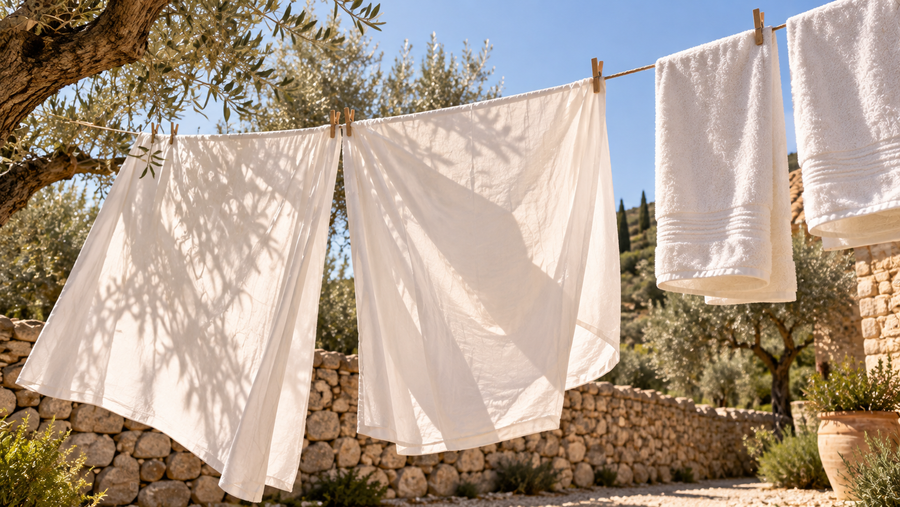
- Dry in daylight when you can. Sunlight bleaches cotton and linen for free.
Oxygen bleach versus chlorine bleach
| Oxygen bleach | Chlorine bleach | |
|---|---|---|
| What it is | Sodium percarbonate, releases hydrogen peroxide in water | Sodium hypochlorite |
| Safe on | Cotton, linen, most synthetics, most colours | White cotton and linen only |
| Never use on | Wool, silk, leather trim | Wool, silk, elastane, anything with spandex, most synthetics |
| Works at | 40 °C and above, slower in cold | Any temperature |
| On yellowed oil | Removes it | Can set it, turning the stain darker |
| On fabric life | Gentle, repeatable | Weakens fibres with repeated use |
For almost every household, oxygen bleach is the right default and chlorine is a specialist tool for white cotton sheets and towels. Never mix chlorine bleach with vinegar, citric acid or any acidic cleaner: the reaction releases chlorine gas.
The restoration soak
For whites that have already drifted, do this once, then go back to the weekly routine.
- Fill a basin or the bath with water as hot as the care label allows.
- Dissolve oxygen bleach at the dose on the pack, usually one to two scoops per 4 litres.
- Submerge the whites completely. Anything floating above the water line will come out two-tone.
- Soak one to six hours. Overnight is fine for cotton and linen.
- Wash as normal at 40 °C with two pods, then dry in daylight.
If the water turns visibly grey, the problem was residue rather than age, and a hard water strip wash will keep it from coming back. The method is in the hard water guide.
Underarm yellowing
This is not sweat. Sweat is almost odourless and colourless. The yellow is aluminium from antiperspirant bound to sebum, and it builds slowly until one day a shirt is finished.
- Treat it as a stain, not as dirt. Make a paste of oxygen bleach and a little warm water, work it into the area, leave it 30 to 60 minutes, then wash at 40 °C.
- If the fabric cannot take oxygen bleach, dab white vinegar on the mark, leave 30 minutes, rinse, then wash with an enzyme detergent.
- Never use chlorine bleach here. It reacts with the protein and oil already in the fabric and drives the yellow darker.
- Prevent it: let antiperspirant dry fully before dressing, and wash shirts after one wear rather than two.
The four stain families and the one rule each follows are in how to get stains out of clothes.
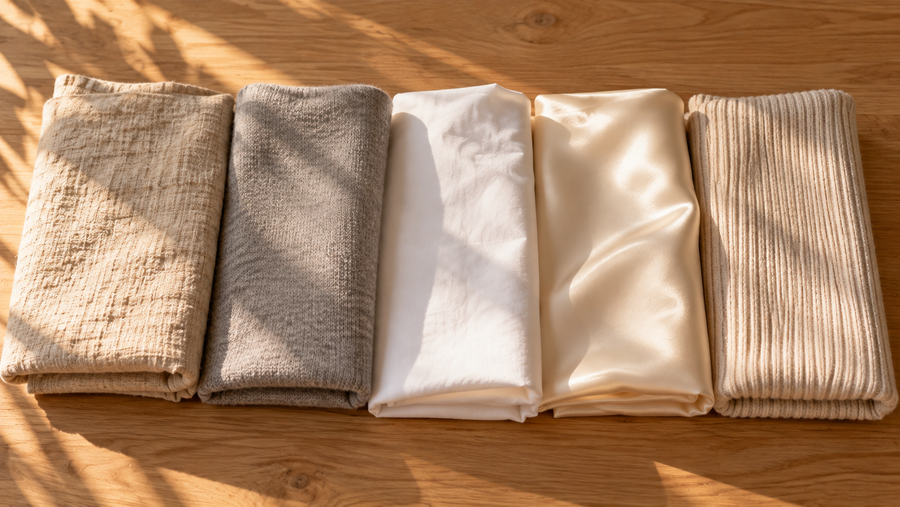
Whites by fibre
| Fibre | Wash | Bleach | Sun |
|---|---|---|---|
| Cotton | 40 °C, normal | Oxygen; chlorine sparingly | Yes, it bleaches |
| Linen | 40 °C, low spin | Oxygen | Yes |
| Polyester and blends | Cold to 40 °C | Oxygen only | Dry in shade; sun yellows polyester |
| Silk | 20 °C, hand wash | None | Never; sun yellows silk in hours |
| Wool | 20 °C, wool cycle | None | Never, dry flat in shade |
White silk and white wool are the two cases where every instinct about whites is wrong. Treat them as delicates first and as whites second: the method is in how to wash wool, cashmere, silk and linen.
Five habits that keep whites white
- Wash them separately, every time.
- Wash them sooner. Body oil that sits for a week oxidises; that is where yellow starts.
- Dose for your water, not for the box.
- Skip optical brighteners as a strategy. They are a coating that makes fabric reflect blue light, and they wash out, which is why brightened whites look worse over time rather than better.
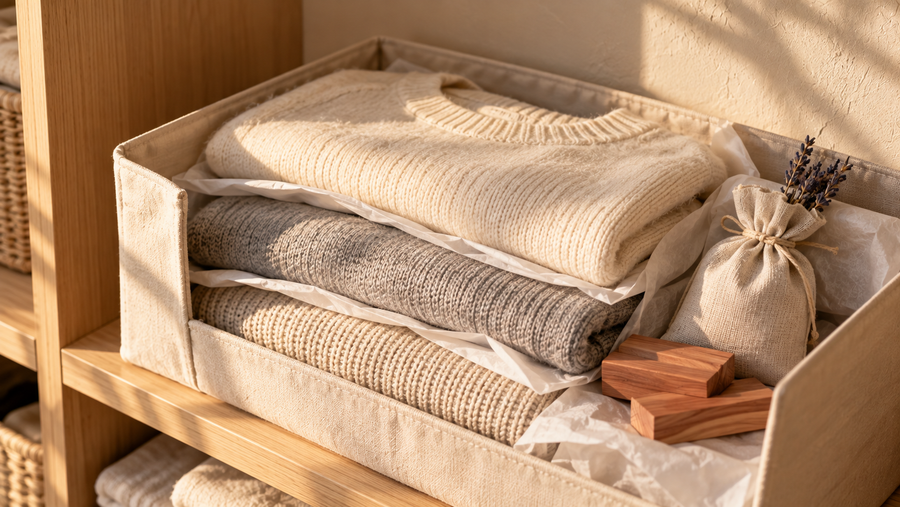
- Store clean, dry and in cotton. Plastic traps moisture and cardboard is acidic; both yellow the fold lines.
The storage chapter, with the fibre index and the care-label decoder, is in The Scent Wash Fabric Care Manual, a free 13-page PDF.
Frequently asked questions
How do you keep white clothes white?
Wash them on their own at 40 degrees Celsius with a full dose of detergent, keep the drum three quarters full, skip fabric softener, treat marks before they are dried, and dry cotton and linen in daylight. Whites dull mainly from residue and from being washed with other colours, not from age.
Why do white clothes turn yellow?
Because body oil left in the fibre oxidises over time, helped along by antiperspirant, fabric softener and storage. It is not dirt arriving, it is oil that was never fully removed. Oxygen bleach and a warm enzyme wash take it out; chlorine bleach often makes it darker.
Can you use bleach on white clothes?
Chlorine bleach is safe only on white cotton and linen, and only occasionally, because it weakens fibres with repeated use. It must never touch wool, silk, elastane or most synthetics, which it yellows permanently. Oxygen bleach is the better default for almost every white load.
What temperature should you wash whites at?
40 degrees Celsius. This is the one load where warm water earns its place, because it clears the body oil that causes yellowing. Reserve 60 degrees for sanitising, and use cold for white silk, white wool and anything with elastane.
Does vinegar whiten clothes?
Not really. White vinegar dissolves mineral and detergent residue, which can make dulled whites look brighter, and it works as a pre-treat on underarm marks. It does not bleach. Never combine it with chlorine bleach.
How do you get yellow underarm stains out of shirts?
Make a paste of oxygen bleach and warm water, work it into the area, leave it 30 to 60 minutes and wash at 40 degrees Celsius. On fabrics that cannot take oxygen bleach, dab white vinegar on the mark, leave 30 minutes, rinse and wash with an enzyme detergent. Avoid chlorine bleach entirely.
Does sunlight whiten clothes?
Yes, on cotton and linen. Ultraviolet light breaks down the compounds that cause yellowing, so line-drying whites in daylight genuinely brightens them. Keep polyester, silk and wool out of direct sun, because sun yellows all three.